


Building a PC of your dream always presupposes hard work. It’s a time-consuming process which consists of several stages and requires a profound knowledge of specific notions, and graphics card is definitely one of them.
That is why we’ve prepared some basic information you should take into account when choosing the graphics card for your computer. Besides, here you will also find the list of the best graphics cards, which includes models suitable for both common users and zealous gamers.
Top Picks
| Preview | Product | |
|---|---|---|
|
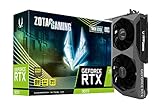
ZOTAC Gaming GeForce RTX 3070 Twin Edge OC 8GB GDDR6 256-bit 14 Gbps PCIE 4.0 Gaming Graphics Card,... | Check at Amazon |
Last update on 2026-07-07 // The links above are affiliate // Images from Amazon
What to consider when choosing a graphics card?
1. What do you need a graphics card for?
Model, size, price – all this comes later. Your first step is to make a final decision concerning the aim of your purchase. What do you need a new graphics card for? If you are planning to play games round-the-clock then make sure your card is fast and has enough RAM.
But if you are planning to work with 3D animation or video production, for example, then you have to pay more attention to the image quality than speed. In this case, you may choose either high-grade cards or even workstation-class graphics cards. Besides, if you are going to use your PC as a media center then check whether the output connector matches the device you want to connect the system to.
Still, if you do not have such serious plans concerning your PC and all you will need it for involves net surfing and some casual games then you may choose a midrange graphics card or a hybrid system.
2. Budget issues
In fact, budget issue is often a starting point of any further research. Your needs, requirements and dreams won’t play any role if your budget doesn’t coincide with them. The general principle here is simple – the more powerful a card is the higher price it has. Thus, if you belong to the category of gaming fans get ready to spend a pretty penny on your new graphics card.
3. GPU: AMD or NVIDIA?
Graphics Processing Unit (i.e. GPU) is a basis of any graphics card and determines its capabilities. If you want to get a high-end piece then pay attention to the part number because the higher it is the better performance a card can offer.
There are two providers of graphics cards you will have to choose between – AMD and NVIDIA. Which one is better? Well, it’s up to you to decide which graphics card will be the most suitable for your PC. The point is that both brands have pluses and minuses. Your task is just to take them into account and select the best card namely for you.
The most wide-spread fact about the difference between AMD and NVIDIA is their price. It is considered that AMD is cheaper than NVIDIA. In fact, we do have doubts concerning this idea. Prices are mostly of the same level and if you compare, for example, NVIDIA GeForce 980Ti and AMD R9 Fury X models you will be even surprised to find out that AMD product is a bit more expensive.
Nowadays AMD is working hard to reach NVIDIA status and to join its high-end niche. Still, NVIDIA shows better performance. It has effective memory speed and a host of exclusive technologies. As to AMD, it offers more autonomy for its users – for instance, you can download its drivers anytime you want directly from AMD official website.
In a nutshell, AMD and NVIDIA seem to be participants of everlasting races, which motivate them to improve their products. And that’s their main benefit.
4. Memory
Whatever brand you will choose, NVIDIA or AMD, you will have to check the basic options their cards offer. One of them is memory. Obviously, more memory in the graphics card guarantees better speed and improves its general performance.
Note that different types of graphics cards offer different RAM. This may be DDR3, GDDR3 or GDDR5. All of them differ in speed and, consequently, price. The best option here is GDDR5.
By the by, always pay your attention to such feature of the graphics card as bandwidth. Poor bandwidth can turn to be a real pitfall for a PC user. That is why don’t forget to check this characteristic in order to get a graphics card with excellent performance. On the whole, modern types of RAM have much better bandwidth than their forerunners.
One more thing you need to know is that the amount of memory affects the resolution a graphics card can be compatible with. For example, a PC with a display higher than 1680×1050 is compatible with 1GB of RAM. Monitors with lower resolution require just 512 MB of RAM. So, if you need a PC for gaming and you’re planning to use several monitors then you will have to get at least 3GB of RAM. You can read more about the best RAM for gaming here.
5. GPU cooling system
Cooling is another aspect which affects the card’s productivity greatly. The general principle is simple – if a graphic’s card has more ventilators then it is able to show better performance.
First of all, you should know that there are reference and non-reference coolers. The point is that AMD and NVIDIA providers sell their cards not only directly to customers but also other companies that add some changes to the cards and sell their own versions of graphics cards which are already modified. Thus, cards which are sold directly to consumers get the reference title while those with modifications – non-reference.
Consequently, original cards have somewhat different cooling systems. Reference graphics cards have got a single fan offset to one side that sends hot air out of your PC case. As to non-reference cooling systems, they often have two fans which blow hot air away from the card but not from the computer case. As a result, this can lead to overheating. Though, they do have their own benefits – non-reference coolers are quieter.
Before choosing between these two types of cooling systems, you have to know the average temperature of your CPU during your usual activities. If it gets higher than 55° C then it’s better to get a reference one as it will blow hot air out of your PC case. Still, if a cooling system of your PC is powerful enough then you can choose the other one.
6. Graphics Card Compatibility
Whatever card you will choose you must be sure that it will be compatible with the other elements of your PC. Usually, weak points are the size of a graphics card, PSU and PCI.
Your first step is to check whether a selected card can be connected to the system. Your PC can have an old type of connection called PCI (peripheral component interconnect) slot, its improved version – AGP (accelerated graphics port technology), or the newest PCIe slots (PCI Express), which are faster and more flexible.
Therefore, before your purchase, you have to know what cards will be compatible with the expansion slots of your computer. Besides, if you’re building a serious gaming machine then probably your PC case can support from two to four cards. In this case, note that both slots and cards should be the same. These technologies have got the following names – SLI in NVIDIA cards and CrossFire in AMD cards.
As to the size issue, top-notch graphics cards are longer. Still, the best option here is to measure the card and space inside your PC case in order to be sure that the card will fit it. What is more, pay attention at the slots at the back of the computer case – they must be big enough to match the output. Of course, you can use adapters for card outputs but it’s always better to have the card which is originally compatible with your PC.
Almost all budget cards get power directly from the PCIe slot. However, graphics cards of higher quality may require connection to PSU. It is usually done by means of 6-pin or 8-pin connectors, though sometimes they may be used both. Thus, if you have such high-end gaming card you will need to check whether your PSU is good enough for this purpose.
11 Best Graphics Cards
MSI RTX 3090 Ventus 3X 24G OC
A Pricey, but Highly Efficient Graphics Card

If you are into top-class gaming and are looking for nothing less than premium performance, the MSI RTX 3090 Ventus 3X 24G OC graphics card is the thing for you.
Simply, everything about this card, from its attractive design and 24GB of GDDR6X memory to 10496 CUDA cores and 1725MHz boost clock speed, tells you what a beast this machine is and that there is a flawless gaming adventure to be expected.
MSI RTX 3090 Ventus 3X 24G OC card comes with triple TORX 3.0 fans, 2nd generation Raytracing cores, and 3rd generation Tensor cores. Also, it has 350W power consumption, solid output capacity with three DisplayPorts and one HDMI port, as well as plenty of handy features such as Thermal Padding, or Zero Frozr function that keeps the fans silent until the burst of cool air, if needed.
In other words, an excellent combination of performance and features, and in the first place, an excellent gaming experience, is what makes this card that great and rightfully places it among the best graphics cards out there – of course, if you have enough money to buy it.
- Attractive-looking
- Fast
- Great performance
- TORX Fan 3.0
- 1725MHz boost clock speed
- 10496 CUDA cores
- PCI Express® Gen 4
- Expensive
EVGA GeForce RTX 2080 FTW3 Ultra Hybrid Gaming
A High-Quality Card for a Fair Price

EVGA GeForce RTX 2080 FTW3 Ultra Hybrid Gaming is a high-quality graphics card with numerous improvements over the previous card generations. These upgrades include, among others, the enhancement in VR applications performance (VRWorks Audio, Variable Rate Shading and Multi-View Rendering), more quiet performance and the introduction of Ray Tracing.
The card itself is equipped with 8GB of GDDR6 VRAM, it has a boost clock of 1860 MHz, a few different connectors (three DP, one HDMI and one USB Type-C), 2944 Pixel Pipelines and a total power draw of 215W, which is very good for this card class.
Its Hybrid Cooling AIO is another aspect this VGA card is showing its qualities in. 120mm fan, combined with the radiator and the closed liquid cooling, delivers very quiet work, even at high RPMs and, more importantly, very low temperatures, from 45°C when fans are not spinning to 75°C under maximum load.
EVGA GeForce RTX 2080 FTW3 Ultra Hybrid Gaming also comes with adjustable RGB LEDs and overall presents a very good option for gaming rigs. Unfortunately, if you want to upgrade your GTX 1080Ti, the improvements aren’t that noticeable. Therefore, you’d better choose some of the RTX 2080Ti cards or leave the upgrade for some other occasion.
In every other situation, this card is a great choice.
- Nice temps
- Ray tracing
- Silent
- LED light controlling over the EVGA or Nvidia software is problematic
- Hard overclocking
- Not much better than the 1080Ti
ASUS ROG-STRIX-RTX3070-8G-GAMING
A Graphics Card Made for Those Who Want More

ASUS ROG-STRIX-RTX3070-8G-GAMING is an expensive, yet excellent graphics card that delivers great overall performance that positions it neck and neck with the RTX 2080Ti cards.
In other words, top-class gaming is guaranteed with this card. Of course, if you want even more, you can always choose some of the RTX 3090 or RTX 3080 card models; however, for the price, this one is the optimal solution.
When talking about sheer specifications, ASUS ROG-STRIX-RTX3070-8G-GAMING comes with 8GB of GDDR6 memory; it has 5888 CUDA cores and brings multiple clock modes that, among others, include “Gaming Mode” with the clock speed of 1905MHz, as well as “OC Mode” that will boost this GPU up to the respectable 1935MHz. However, if you are not happy with the offered settings, you can always tweak it yourself, with the help of the GPU Tweak II software, and adjust it the way you like it.
Moreover, this card comes with Dual-BIOS, 280W TDP, and PCIe 4.0 connection. Also, it is fitted with five video outputs (two DisplayPorts and three HDMI ports), four of which can be used simultaneously; it has HDCP 2.3 support and comes with top-class cooling that incorporates Axial-Tech Fans and that will cool the card in no time.
ASUS ROG-STRIX-RTX3070-8G-GAMING is also equipped with addressable RGB that is fully customizable, thanks to ASUS ROG Armory, and overall has quite a lot of features that should make your gaming an awesome experience.
All in all, if you are after the best graphics card, but still don’t want to spend more than necessary, ASUS ROG-STRIX-RTX3070-8G-GAMING is the optimal solution that simply won’t disappoint you.
- Top-class cooling
- PCIe 4.0 connection
- Good connectivity (three Display ports and two HDMI ports)
- Fast
- 5888 CUDA cores
- Pricey
ASUS ROG Strix GeForce RTX 2060 Super
A Perfect Mainstream Gaming Tool

If you are seeking a great-performing graphics card in the full HD and QHD resolution that will also provide a whole arsenal of appropriate features, ASUS ROG Strix GeForce RTX 2060 Super is the card for you.
As mentioned, this card best belongs in the mainstream segment, where it shows the best results, due to its boost clock of 1830MHz, 2176 CUDA cores, and 8GB of GDDR6 memory. Of course, that doesn’t mean you can’t use it in 4K gaming, for instance. However, be prepared for lower frame rates; therefore, it won’t be that impressive gaming experience.
Keep in mind that ASUS ROG Strix GeForce RTX 2060 Super also provides ASUS Aura Sync RGB compatibility, two DisplayPorts 1.4 and two HDMI2.0 ports and that it comes with a great software package (GPU Tweak II, Game Booster, XSplit Gamecaster, Quantum Cloud, etc.) that aren’t a decisive factor for anyone; nevertheless, they certainly add to the cards overall value.
Other cool features of this card include silent performance, 175 Watt TDP, as well as low-temperature values that never exceed 65° Celsius, even when playing heavy games in a silent mode.
To make a long story short, if you are looking for the best graphics card in the mainstream segment, ASUS ROG Strix GeForce RTX 2060 Super should pretty much be your leading horse.
- Dual BIOS
- Great performance
- Aura Sync RGB lighting
- Silent
- Very good temperatures
- Pricey
PNY GeForce RTX 3080 10GB XLR8
One of the Best Ones for the Price

PNY GeForce RTX 3080 10GB XLR8 is a high-performing graphics card that is the ultimate choice for die-hard gaming thanks to its excellent characteristics and the long list of features. This card doesn’t hold the number one spot among cards; however, it brings a lot and does a terrific gaming job that would make anyone happy.
That should be no surprise since this card comes with 10GB of GDDR6X (320-bit) memory, 4352 CUDA cores, and 760GBps bandwidth. If you also include its PCI Express 4.0 compatibility, 1710MHz boost clock, and numerous features such as NVIDIA DLSS, NVIDIA G-SYNC and HDCP2.3 support, into the equation, it is evident that this card is more than capable of creating a significant impact on your gaming.
Furthermore, this card comes with 320W power consumption; it has a triple-fan design that guarantees its good-quality cooling and provides plenty of connectivity with its three DisplayPorts and one HDMI port – and they can all be used at the same time, to make things even better.
In other words, PNY GeForce RTX 3080 10GB XLR8 is one of the best graphics cards out there and a choice that will certainly astonish you with its capabilities.
- Good connectivity
- PCI Express 4.0 interface
- 4352 CUDA cores
- Feature-rich
- Well-built
- Expensive
ASUS ROG Strix AMD Radeon RX 5700XT
The Best RX5700XT There Is

If you are a fan of the AMD’s red corner but are worried because of the high noise and temperature levels of its reference models, ASUS ROG Strix AMD Radeon RX 5700XT might be the gift from heaven for you, simply because this kind of problems is non-existent for this card. Its temperature, even in the high demanding, fast-pasted games, never passes the 70° mark, while the noise levels are around 36 dBA, which is a drastic reduction when compared to the reference models 43 dBA.
In the case of ASUS ROG Strix AMD Radeon RX 5700XT, the overall performance of the card is simply raised to another, a much higher level than the one that’s is offered through the AMDs reference models, which ultimately positions this card well above the competition and justifies its higher price at the same time.
The point being, this card offers so much for its price, such as 2560 Stream Processors, fairly solid TDP of 235 Watts, very good QHD gaming performance, and on top of that, easier overclocking process over the reference models. Moreover, although it is fitted with three DisplayPorts and one HDMI port, it supports up to six displays; it is equipped with Dual BIOS and altogether delivers performance somewhere in between RTX 2060 and 2070, and very similar to the RTX 2060 SUPER.
All in all, if you are after the best AMD graphics card out there, ASUS ROG Strix AMD Radeon RX 5700XT simply has to be yours.
- Silent
- A solid cooling performance
- Dual BIOS
- Very good 1080p and 1440p performance
- No Raytracing
- Memory isn’t overclocked
XFX RX 5700 Xt Thicc III Ultra
A Significant Upgrade of an Already Great Card

People at XFX have obviously done their homework and realized that AMD’s reference RX 5700 and RX 5600 models offer very good gaming performance; however, they show weaknesses in the cooling and noise performance. They tried to fix that by releasing their XFX RX 5700 Xt Thicc II Ultra model and have, in large part, succeeded in that. Nevertheless, there were still some issues that prevented this card from becoming the best graphics card there is and finally, with the arrival of its upgraded Thicc III Ultra version, everything has changed.
To begin with, this card offers 50-percent improved noise performance compared to the reference model (Thicc II Ultra had a 35% increase); it offers lower power consumption than its predecessor and the most importantly, its two 90mm and one 100mm fan are doing the magnificent job of cooling this GPU, keeping the maximum temperatures during gaming, at around 70° C mark, which is a significant improvement over the reference models.
When talking about sheer performance, XFX RX 5700 Xt Thicc III Ultra has a boost clock of 1,935MHz in the Performance mode, which helps its gameplay being smooth in both 1080p and 1440p resolution, or in other words, this is where it shows its best results.
XFX RX 5700 Xt Thicc III Ultra comes fitted with three DisplayPorts and one HDMI port; it is equipped with Dual BIOS and overall delivers very attractive looks. Simply, with this card, you are getting the whole package: great performance, good cooling, and noise performance and on top of that, a design that will keep you smiling whenever you look at it.
- Very good cooling performance
- Quiet
- Dual BIOS
- Attractive looking
- Great performance
- High power consumption
- A bit large
- No Raytracing
XFX RX 5600 XT THICC II PRO
An HD Gamer’s Dream

If you are a more budget-oriented gamer that is seeking a solid, but not too expensive graphics card that will deliver excellent 1080p gaming performance and a fairly solid 1440p one, XFX RX 5600 XT THICC II PRO card is the choice for you.
Have in mind that this is the best 5600XT graphics card available, along with Sapphire Pulse and that, is neck and neck with the NVidias RTX 2060 when it comes to performance. In other words, you will be able to play games in a 1080p resolution at framerates that are close to three-figure numbers, while in the 1440p department, you will have framerates at around 60fps that guarantee a decent level of details and solid game flow.
When talking about temperature and noise performance, XFX RX 5600 XT THICC II PRO shows more than satisfying results and delivers very quiet operations, as well as solid temperature values that don’t exceed 74°C even during heavy gaming sessions. Moreover, this graphics card provides 2304 stream processors, 144 TMUs and it has a boost clock speed of up to 1620MHz, which is another guarantee of its solid performance.
All in all, if you are after the best graphics card in the sub $300 area, XFX RX 5600 XT THICC II PRO should certainly be among your three top picks.
- Sleek looking
- Dual BIOS
- Quiet
- Excellent Full HD gaming
- Very good power efficiency
- No Raytracing
ASUS TUF RTX 3090 OC
The Best There Is

If you are after the graphics card that will give you premium performance, top-class build, and that will genuinely present the best of the best among the graphics cards, ASUS TUF RTX 3090 OC is the item for you.
To be exact, this device brings military-grade components – before anything else, capacitors that provide great durability and excellent performance. Then, there is an impressive cooling capacity that includes a large two-part cooler, with three Axial-tech fans that provide super-quiet, but for the most part, efficient performance.
Moreover, ASUS TUF RTX 3090 OC comes with the impressive 24GB of GDDR6X memory, 10496 CUDA, and 328 Tensor Cores, as well as solid connectivity that involves two HDMI ports and three DisplayPorts, which is another reason why this card is positioned at the top spot among the best graphics cards.
However, that isn’t everything, since this card also brings great overclocking capability, and although its base clock is 1395MHz, can be boosted to the official 1695MHz, but more importantly, super-fast 1,770MHz, with a little tweaking in the GPU Tweak II software.
To conclude, ASUS TUF RTX 3090 OC is an amazing graphics card that has so much to offer; nonetheless, its price is kinda ridiculous, because it cost as much as two RTX 3080 cards, and the advantage over it is nowhere near that ratio. Therefore, if you are after the best of the best, ASUS TUF RTX 3090 OC should be your choice, but if you want the most rational option for your gaming, some of the cards from the RTX 3080 specter might be a more suitable option.
- Great build quality
- Excellent thermal performance
- Dual BIOS
- Nice-looking RGB lighting
- Four-year warranty
- PCIe 4.0 interface
- Pricey
ZOTAC Gaming GeForce GTX 1660 Super
An Affordable Gaming Power Tool

ZOTAC Gaming GeForce GTX 1660 Super is an attractive-looking graphics card that is mainly designed for full HD gaming and users that have a limited budget but want to have a decent gaming experience.
However, its gaming performance and overall capabilities drastically surpass its market and price position and allow not only excellent quality 1080p gaming, but 1440p gaming, with a framerate of around 60fps, and even more impressively, 4K gaming at a useable 30fps framerate as well, which is a jackpot for this price range.
Moreover, ZOTAC Gaming GeForce GTX 1660 Super offers good overclocking capabilities and delivers very good temperature values that never pass 65° C. On the other hand, its noise levels aren’t that good and with 37 dBA, this card is pretty audible, which is something you can live with; nevertheless, it is something ZOTAC could have handled, even in this price range.
When talking about sheer specifications, ZOTAC Gaming GeForce GTX 1660 Super offers a very nice boost clock speed of 1845MHz (reference model has a boost clock of 1785MHz); it has 1708 stream cores, 88 TMUs and 48 ROPs, and is fitted with three DisplayPorts and one HDMI port, which altogether makes a very good package – of course, if the best graphics card in the mainstream field is what you have been looking for.
- Very good value for the money
- Good overclocking capabilities
- Energy efficient
- Low temperature
- Attractive looks
- Not that silent during work
- Memory isn’t overclocked
ZOTAC GeForce RTX 3070 Twin Edge OC
A 1440p Gaming Masterpiece

ZOTAC Gaming GeForce RTX 3070 Twin Edge OC is another card in the new wave of RTX 3XXX series cards that provide great performance and present a significant upgrade over the last generation RTX 2XXX cards and its upgraded RTX 2XXXTi versions. This is a card that probably presents the best value for the money among these new coming cards and provides the performance that is neck and neck with the RTX 2080 Ti cards, which is a pretty good deal when we include its reasonable price.
When talking about this graphics card’s specs, you should know that they include 8GB of 256-bit GDDR6 memory, PCIe4.0 interface and boost clock listed at the 1755 MHz mark, that can rise to even more impressive numbers with a little bit of tweaking. In other words, you will be able to play the latest games in 4K resolution, with a framerate between 50fps and 70fps, while sky will be your only limit in the 1440p resolution.
To make things even better, this card comes with HDCP 2.3 support, it has a solid connectivity that involves three DisplayPorts and one HDMI port, and provides support for the simultaneous display at up to four screens. Moreover, this card supports Ray Tracing; it has a power consumption of some 220W and it comes equipped with a highly capable cooling system that is consisted out of two 11-blade fans, with Freeze Fan Stop function and Active Fan Control, and that brings another diamond to this card’s crown.
Simply, this card gives so much for the price, and if you are into high-end gaming at the most reasonable price possible, ZOTAC Gaming GeForce RTX 3070 Twin Edge OC is probably the best device you will find.
- Ray Tracing
- Excellent performance
- PCIe 4.0 interface
- Good connectivity
- None
There is no doubt that powerful PC needs a hefty motherboard. But the quality of graphics card you choose for your computer also plays a crucial part. Therefore, if you really want to get the best of the lot you should be aware of all pitfalls you may face when selecting the best graphics card for your PC.

