


If you’re a gamer in the process of building your ultimate gaming PC, you’re, most likely, looking for the best motherboard for gaming. A motherboard holds all of the core components of a PC together, but not all motherboards are the same and some will only be compatible with certain components.
Whether you’re looking for an Intel or AMD motherboard, there are plenty of options available. With this guide, we’ll show you the basics of how to choose the best gaming motherboard along with a list of some of the best motherboards currently available.
LGA 1200 Motherboards



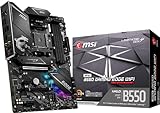
Last update on 2026-07-07 // The links above are affiliate // Images from Amazon
AM4 Motherboards

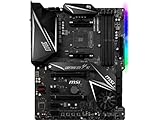

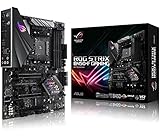

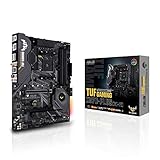
Last update on 2026-07-07 // The links above are affiliate // Images from Amazon
LGA 2066 Motherboards
| Preview | Product | |
|---|---|---|

|
ASUS Prime X299-Deluxe II X299 Motherboard LGA2066 (Intel® Core™ X-Series) ATX DDR4 M.2 U.2... | Check at Amazon |
Last update on 2026-07-07 // The links above are affiliate // Images from Amazon
What is a Motherboard?
A motherboard is a printed circuit board where all the other components of a computer or device are connected or “plugged” into. It’s like the backbone of the computer that holds all the parts together. However, it also plays an important role in distributing power and making connections between the RAM, CPU, hard drives and all the other components. A motherboard may also contain spaces for expansion in case you’d like to make upgrades to futureproof your PC.
PCs, laptops, phones and other devices all have motherboards in various sizes and complexities. When searching for the best motherboard for gaming, here are a few features to look out for:
Form Factors
Motherboards can come in a variety of different form factors, but the most common include ATX and microATX. Form factors in a motherboard refer to various specifications that describe the dimensions, type and position that a given motherboard has. Without having compatible form factors, you won’t be able to properly put together all of your PC’s components onto your motherboard.
Chipset
A chipset manages the flow of data between the different components of the PC. It can be nicknamed a “communications hub”. Newer chipsets have the potential to reduce latency and increase the responsiveness of a system, which is a great advantage for PC gamers. The type of chipset in your motherboard also has a major impact on the system’s overclocking capability, with newer series generally more adept at supporting overclocking and heavy gaming.
Socket Type
There are three main socket categories discussed in this guide: LGA 1200, LGA 2066 and AM4. The type you choose will fully depend on a CPU that you want to use. It all comes down to the size and fit of the sockets where the processor plugs into the motherboard. The size and fit will vary among manufacturers and it’s essential to make sure your motherboard has a compatible socket for the type of CPU you want to use, otherwise, all of the components simply won’t function.
How to Choose The Best Motherboard For Gaming
Once you’ve picked out an SSD, graphics card and RAM, you’ll need a motherboard that will be able to support all of those things. If you’re searching online for the best motherboards and reading product descriptions, pay close attention to the specifications of the motherboard you’re interested in. Due to the large complexity of motherboards and their wide array of features, the best way to choose one for your needs is to start by looking at socket type and narrowing down by specifications and added features.
CPU and socket type
Pick your CPU first, as this will be the brain of your computer. Once you’ve found the best CPU for your needs, the type of CPU you have will only be compatible with certain types of motherboards. AMD (which includes AM4) and Intel (which includes LGA 1200 and LGA 2066) are the two primary types of CPU, with socket shapes being one of the most important differences to consider when looking for a compatible motherboard.
RAM
RAM, your computer’s storage space for temporary data, comes in many types. When thinking about RAM, the best features to look for is the minimum and maximum RAM speeds of your motherboard (normally between 2400 and 4400 MHz). You do not want to get RAM slower than your motherboard’s capabilities as it will cause complications.
You also want to make sure your motherboard’s DDR type matches your RAM. The types of RAM channels that the motherboard can hold is also important if you’re looking to get a speed boost when using multiple sticks of RAM in the right slots. The two different types of channels are dual and quad, with quad channels having the potential to better deal with memory bandwidth loads.
M.2
M.2 slot is today’s norm and the place where super-fast NVMe SSDs are installed. There is at least one of them on each motherboard; however, if you are a more demanding user, two, three, or even four M.2 slots are a much more preferable option.
SATA ports
With time, SATA ports are becoming less and less important; nonetheless, they still play an important role. They present the place where you connect your HDDs (if you still use them), regular SATA SSDs, Blu-ray players, and similar hardware. A mid-range motherboard usually has six SATA ports, while the higher-end motherboards can have even more, offering more space for expansions.
USB slots, Wi-Fi, and Ethernet ports
Different motherboards have different configurations, and varying numbers and types of USB ports, Ethernet ports, as well as Wi-Fi connections. The numbers to look for should be based on your personal preference for how much use you think you’ll need out of these components.
PCI express (PCIe) slots
This is a section of the motherboard where expansion cards are placed. This not only includes graphics cards but also sound cards, Ethernet adapters and other cards that can give your PC additional capabilities. If you’re looking for the best possible gaming experience, you should be on the lookout for a motherboard that allows you to have multiple graphics card connections (this is usually called “crossfire” or “SLI”).
Overclocking and thermal management
If you plan on pushing your PC to its limits beyond the specifications of the manufacturer, you’re going to need to make sure your motherboard can handle it. Your motherboard should also have water cooling or a very high-performance air cooling system to avoid hardware damage while overclocking.
Sound and audio
Most motherboards have integrated sound capabilities to reduce the need for buying extra audio components. One of the most important things to look for in onboard audio is the codec because, the better the codec, the better the sound quality played through your speakers or headphones.
Build quality and reliability
Always ensure that you’re buying a motherboard with a long warranty from a reputable manufacturer. Some models are prone to being DOA (“dead on arrival”), so look over product reviews ahead of time and choose newer, well-tested models. Solid capacitors and reinforced slots are other qualities that generally reflect durability and added protection, although too much covering can add bulkiness.
Aesthetics
Many motherboards have unique and attractive designs that can take your setup to the next level of superiority. Mystic Light Extension and AURA Sync RGB lighting are some of the most popular lighting features that enable you to add custom lighting to your motherboard in different places and colors for personalized aesthetics.
BIOS
BIOS stands for “Basic Input/Output System”. It’s a built-in software that allows you to access and change your computer on a very technical level. This is where you would access overclocking settings. UEFI (Unified Extensible Firmware Interface) is the newer version of BIOS that you may also come across in newer motherboards.
Best LGA 1200 Motherboards
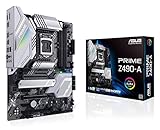
ASUS Prime Z490-A
A Mid-tier Oriented Gaming Motherboard

ASUS Prime Z490-A is a solid, fair-priced LGA1200 gaming motherboard that is primarily made for users that are seeking a quality performance but are very careful about their spending at the same time.
This motherboard offers plenty of storage capacity (six SATA ports and two M.2 slots), it has respectable connectivity (four USB 3.2 Gen1 ports (two on the rear side), six USB 3.2 Gen2 ports (four on the rear side), six USB 2.0 ports (two on the rear side), one DisplayPort, one HDMI port, etc.) and provides a very good audio experience thanks to its Realtek S1200A audio codec.
When talking about RGB effects, you should know that ASUS Prime Z490-A offers plenty of options and comes with Aura Sync RGB lighting, as well as multiple RGB headers, including the Gen 2 ones. In other words, an attractive visual happening is guaranteed.
Unfortunately, there is also one serious drawback – the problems with its 2.5Gb Intel I225-V Ethernet. However, since this is a brand new board, that will probably be fixed with some BIOS update in the near future.
On the other hand, this motherboard offers very good cooling capabilities and comes fitted with VRM and PCH heatsink, as well as Fan Xpert 4 utility that should certainly help you find the perfect configuration in no time.
All in all, if you want one of the best gaming motherboards out there, but are not willing to spend a real fortune on it, ASUS Prime Z490-A is as made for you.
- A decent price
- A solid performance
- Good connectivity options
- Problematic Ethernet port
- No Wi-Fi
ASUS ROG Maximus XIII Hero
A Well-Rounded, High Performing Motherboard

Asus ROG Maximus XIII Hero is a premium-quality gaming motherboard, with solid overclocking capabilities and plenty of features that make it a perfect fit for high-end gamers.
This is a well-built device, fitted with robust power delivery, with 14+2 power stages, enlarged VRM heatsinks, as well as very good Aura Sync RGB lighting. Equally importantly, there are the very neat four M.2 slots, accompanied with six SATA ports, as well as excellent audio performance, thanks to the inclusion of the Realtek ALC4082 audio codes, with ESS ES9018Q2C DAC.
In addition, there are also plenty of connectivity options that involve a dual Thunderbolt 4 port, six USB2.0 ports (two on the back), 11 USB3.0/3.1 ports (six on the back), as well as two HDMI ports. Also, there are two PCIe 4.0 x16 slots, one PCIe 3.0 slot, and generally, pretty good networking capabilities.
To be exact, there is built-in WiFi 6E (802.11ax), accompanied by dual Intel 2.5 Gb Ethernet, as well as ASUS LANGaurd. In other words, there is more than enough connectivity, even for the most demanding users.
More importantly, this Z590 motherboard brings a very good performance, feature-rich BIOS, and plenty of options for tweaking. In short, it has everything you need for premium gaming, as should be the case with the best gaming motherboard out there.
- 14-phase 90A VRM
- A big number of USBs
- Four M.2 slots
- Excellent audio
- Good connectivity
- Stable performance
- No 5Gbps or 10Gbps Ethernet controller
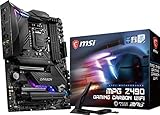
MSI MPG Z490 Gaming Carbon WiFi
An Affordable, High-Performing Gaming Motherboard

MSI MPG Z490 Gaming Carbon WiFi is a good-performing motherboard, with solid overclocking capabilities and a long list of features that position it neck and neck with the best gaming motherboards out there. This is a high-end device, suitable for budget-oriented gamers.
To be exact, this is a motherboard fitted with the Z490 chipset, 12+1+1 Digital Power design, and equally importantly, an amazing Mystic Light, with 29 predefined effects. Moreover, this motherboard also features Audio Boost 4, with the ALC1220 Audio Processor, and offers great connectivity. That means there is a single DisplayPort and a single HDMI port, as well as eight USB3.2 ports (four on the rear end), six USB2.0 ports (two on the rear end), as well as a Realtek RTL8125B 2.5G LAN Ethernet port.
In addition, there is also Wi-Fi 6, equipped with both MU-MIMO and OFDMA technology and three PCIe 3.0 x16 slots, enhanced with two PCIe x1 slots for the additional expansion capabilities.
When talking about storage capacity, there are six SATA ports, and more importantly, two M.2 slots with M.2 Shield Frozr, which is the main reason for the support of 32GBps speeds.
MSI MPG Z490 Gaming Carbon WiFi supports RAID 0/1/5/10 and offers very good overclocking capabilities that, for instance, allow you to boost the Intel Core i9 10900K up to 5.2 GHz with ease. In other words, it offers quite a lot for the price.
All in all, this motherboard offers a great combination of price, performance, and features; therefore, if you are after an affordable gaming motherboard, it is obvious that this one is the perfect choice.
- Affordable
- Mystic Light
- Good overclocking capabilities
- Good connectivity
- Only two M.2 ports
ASUS TUF Gaming Z590-Plus
A Basic, yet Great-Performing Gaming Motherboard

ASUS TUF Gaming Z590-Plus is an entry-level Intel Z590 board, with a reasonable price and more basic-oriented features, perfect for gamers with a limited budget. This motherboard is reliable and offers all necessities; however, it lacks features such as a 10G LAN, or an additional PCIe 4.0 slot, although that isn’t important for most people, anyways.
On the other hand, this motherboard brings the 14+2 DrMOS power stages, three M.2 slots, as well as decent connectivity. To be exact, there is HDMI and DisplayPort connection, five USB3.2 ports (one Type-C), and two USB2.0 ports on the back. Moreover, there is also a single PCIe 4.0 x16 slot, one PCIe 3.0 x4 slot, and two PCIe 3.0 x1 slots. In other words, there is limited, yet good enough connectivity for most users.
In addition, there is also Intel I225-V 2.5Gb LAN, as well as the Intel AX201 WiFi-6 chip, with MU-MIMO and OFDMA, and Bluetooth 5.2. connection – altogether, a solid deal.
ASUS TUF Gaming Z590-Plus is capable of handling 5333 MHz memories and features a premium build quality that involves military-grade TUF components, ProCool sockets, and other long-lasting components. More importantly, this motherboard brings great value for the money and ultimately presents exactly what true gamers need, without the unnecessary bells and whistles.
- Very good value for the money
- Good-looking
- Solid VRM and cooling
- A limited number of USB ports on the back
MSI MPG Z490 Gaming Edge
Excellent Mid-Range Gaming Motherboard

If you are seeking a truly valuable motherboard that will satisfy you on the gaming front, as well as its feature-rich nature and its whole attractiveness, MSI MPG Z490 Gaming Edge is the motherboard for you.
This is the device that has everything that a mainstream gamer might need, such as good overclocking capabilities, great RGB lighting that includes an integrated chipset heatsink lighting zone, and good networking, with integrated Realtek RTL8125B 2.5G LAN controller, Intel AX201 Wi-Fi6 chip, and the BT 5.1 support.
Also, this motherboard provides a solid audio experience, due to the ALC1220 HD audio codec, as well as storage capacity that includes regular six SATA ports and two M.2 slots.
Furthermore, MSI MPG Z490 Gaming Edge comes equipped with multiple connection types that involve DisplayPort, HDMI connection, multiple USB ports, two PCIe3.0 x16 slots, etc., and it provides very good overall performance that rightfully places it among the best gaming motherboards in the mainstream market.
In other words, if you want a good build quality, solid performance, and attractive looks in one, MSI MPG Z490 Gaming Edge is definitely the device to seriously consider.
- Attractive-looking
- Good RGB support
- Excellent design
- Good overall performance
- Great BIOS stability
- Good build quality
- A bit pricey
MSI Z590-A PRO ProSeries
The Essentials that Do the Job

If you are seeking an affordable and good-performing gaming motherboard, in a more traditional, Spartan edition, MSI Z590-A PRO ProSeries is the device for you. As you may guess, this motherboard won’t impress you with its features, because it lacks some of them, or they aren’t as premium as on the more expensive devices. However, the performance, overclocking capabilities, and reliability are on pair with the best gaming motherboard out there.
Yes, there is no Wi-Fi, and the audio codec coul be a bit better, but the 5.1 GHz speed, with the Intel Core i9 10900K CPU, is achievable, without too much of a hassle. However, that isn’t all this motherboard has to offer, there is also 12+2+1 Power Design, as well as support for 5333MHz memories, and Intel I225-V 2.5G LAN.
MSI Z590-A PRO ProSeries also features 7.1 Channel Audio, with Audio Boost, has three M.2 slots, and comes with decent expansion capabilities. To be exact, there is one PCIe 4.0 x16 slot, one PCI 3.0 x16 slot, and two PCIe 3.0 x1 slots.
Moreover, its cooling involves M.2 Shield Frozr and thickened copper build, while the connectivity is on the bright side. In short, there are eight USB ports of various types and generations, including one Type-C port. In addition, there is also one HDMI port, as well as one DisplayPort, audio jacks – in other words, the whole package.
Therefore, if you are after the best gaming motherboard in the budget-friendly area, MSI Z590-A PRO ProSeries is more than a reasonable choice.
- Affordable
- Three M.2 slots
- Decent connectivity
- Good cooling capabilities
- No Wi-Fi and Bluetooth connectivity
- Not the best audio codec
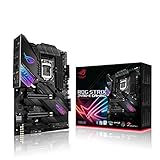
ASUS ROG Strix Z490-E Gaming
An Excellent All-Around Gaming Motherboard

ASUS ROG Strix Z490-E Gaming is a well-built, feature-rich motherboard that presents a great all-around device thanks to its esthetics and overall performance. It is perfect for both gaming enthusiasts and mainstream gamers.
This is a board that has everything that the best gaming motherboard should have, such as 16 power stages, good storage capacity (two M.2 slots and six SATA ports), Aura Sync compatibility, as well as multiple RGB headers for a wide variety of RGB lighting options. Moreover, there are three PCIe 3.0 x16 slots and three PCIe 3.0 x1 slots, HDMI and DisplayPort, a variety of USB ports (four USB 3.2 Gen1 ports (two on the rear side), five USB 3.2 Gen2 ports (four on the rear side), eight USB 2.0 ports (four on the rear side)) and most importantly, excellent overclocking capabilities, as well as good gaming performance that are the key reasons for the success of a gaming motherboard in the first place.
ASUS ROG Strix Z490-E Gaming comes fitted with Intel AX201 WiFi 6 and Intel 2. 5 Gb Ethernet; it offers great audio experience due to the SupremeFX S1220A codec and DTS and Sonic Studio III support, and overall delivers more than a fair value for its price, which ultimately makes it one of the more desirable motherboards available on the market.
- Good overclocking capability
- Feature-rich
- A solid performance
- Fair-priced
- Well-built
- Good power delivery
- Nice-looking
- Only one LAN port
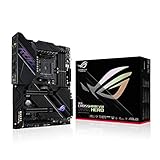
ASUS ROG Crosshair VIII Dark Hero
One of the Best AM4 Motherboards You Will Ever See

ASUS ROG Crosshair VIII Dark Hero is a reliable and high-performing motherboard, with the X570 chipset. This is a great AM4 board, that will help you boost the Ryzen 9 5950X over 5GHz with ease. In other words, it is everything you need for a true gaming experience.
The list of its features is quite long, and it involves great USB connectivity and solid networking options. To be exact, there are 19 USB ports (five USB 3.2, 10 USB 3.1, and four USB2.0 ports), 12 of which are located on the rear end, as well as both Wi-Fi 6 (AX200 controller) connection and dual Ethernet ports (1G Intel I211-AT and 2.5G Realtek RTL8125 chip). Moreover, this motherboard features very robust 16-stage power delivery, five-way optimization, and Aura Sync RGB lighting.
In addition, there are also eight SATA ports, two M.2 slots, and excellent audio that comes as a result of the built-in Realtek ALC1220 7.1 Channel HD audio controller. Furthermore, there are also two PCIe 4.0 x16 slots, one PCIe 3.0 x16 slot, and one PCIe 4.0 x1 slot. In other words, more than enough expansion capability for most gamers.
ASUS ROG Crosshair VIII Dark Hero is pretty attractive-looking, and it offers great endurance, thanks to the premium components used for its build and its protective features, such as the ASUS SafeSlot. In short, this motherboard combines great performance, a long list of features, and great looks in one, presenting one of the best X570 gaming motherboards available, and a great purchase if you decide on one.
- Excellent connectivity
- 12 USB ports
- Very good overclocking capabilities
- Nice design
- Eight SATA ports
- No chipset fans
- 16-stage power delivery
- Pricey
- Only two M.2 slots
- No USB 3.2 Gen2 ports
MSI MPG B550 GAMING EDGE WIFI
An Affordable, yet Solid Gaming Motherboard

If you are looking for an affordable, but capable gaming motherboard that offers a good set of features and overall solid performance, MSI MPG B550 GAMING EDGE WIFI is the device for you. Yes, fact is that this motherboard isn’t among the best boards out there; however, considering the combination of performance, features, and most importantly, price, it is more than worth buying.
The reasons for such a claim are numerous, yet the most prominent ones are eight-phase 60A power delivery, Mystic light with two nests RGB Strips, four RGB connectors, and 29 predefined effects, and most importantly, its reliable performance. In addition, this motherboard also supports 5100MHz RAM modules and features both Wi-Fi 6 (AX200 controller) and 2.5G Realtek RTL8125B LAN connection.
Furthermore, there is also a dual M.2 slot, six SATA ports, support for RAID 0, 1, and 10, as well as a handful of other connectivity options. To be exact, there are a single HDMI and a single DisplayPort, six USB2.0 ports, and seven USB3.2 ports, including one USB3.2 G2 Type-C port and one USB3.2 G2 Type-A port available on the rear.
MSI MPG B550 GAMING EDGE WIFI comes with one PCIe 4.0 x16 slot, one PCIe 3.0 x4 slot, and two PCIe 3.0 x1 slots. Moreover, it is fitted with Realtek ALC1200 Codec and Audio Boost and overall, it brings a great value for the money. Therefore, if you are after an affordable, yet excellent-performing gaming motherboard, MSI MPG B550 GAMING EDGE WIFI is more than a reasonable choice.
- Robust VRM
- Six-layered PCB
- Affordable
- Excellent audio
- Support for 5100 MHz RAMs
- Very good passive cooling
- No hybrid fan connectors
Best AM4 Motherboards
ASUS ROG Strix X570-E
A Gaming Motherboard that Delivers an Excellent Value for the Money

ASUS ROG Strix X570-E motherboard is a device that delivers quality performance and a good set of premium features at a reasonable price.
This is an AM4 socket-based motherboard that offers good connectivity, with two Ethernet connections (Realtek 2.5 Gigabit Ethernet and Intel Gigabit Ethernet), Wi-Fi 6 connection, with MU-MIMO functionality and BT5.0. Furthermore, it comes with two M.2 slots, eight USB3 Gen2 and two USB2.0 ports, eight SATA ports, and a lot more.
Also, it has three PCIe 4.0 x16 expansion slots, the third of which support only x4 mode, while the first two support for either a single x16 or dual x8 mode. It offers a three-year warranty. In addition, it comes with SupremeFX S1220A HD audio codec and support for both two-way NVIDIA SLI and Asus Aura.
More importantly, this ROG Strix X570-E delivers an excellent performance that can be compared with MSI Prestige X570 Creation that offers similar efficiency, but at a drastically higher price. Moreover, its good overclocking capacity allows it to boost Ryzen 9 3900X to 4.4 GHz without much trouble, which is less than the official maximum boost clock of 4.6GHz, but still pretty respectable.
All in all, ROG Strix X570-E is one hell of a product that is a perfect fit not only for die-hard gamers, searching for the best gaming motherboard, but also for power users. In other words, this motherboard is an amazing buy that will surely not disappoint you.
- Solid overclocking capabilities
- Cheaper than the competition
- Great connectivity
- Only two M.2 connectors
MSI MPG X570 Gaming Edge Wi-Fi
A Fair-Priced Solid Performing Midrange Motherboard

If you are into more affordable, but still pretty efficient motherboards with a lot of expandability options, MSI MPG X570 Gaming Edge Wi-Fi is a motherboard for you. It is pretty similar to the more expensive X570 Gaming Pro Carbon WIFI, but with some minor differences such as, for instance, installment of Realtek 8111H Gigabit LAN Controller instead of Intel I211AT controller, a lack of additional decorations, etc.
Gaming Edge Wi-Fi comes with a solid set of features that include Realtek 8111H Gigabit Ethernet, Wi-Fi 5 with MU-MIMO function, Audio BOOST4, and MSI Mystic Light that offers a variety of color styles and options. Moreover, it offers good expandability, with two M.2 slots, six SATA ports, eight USB3 Gen2 ports, two USB3 Gen1 ports, and many other connectivity options.
Furthermore, there are also two PCIe4.0x16 expansion slots that can work in a single x16 or dual x8 mode and three PCIe3.0x1 slots. In other words, everything needed for decent gaming is there.
MSI MPG X570 Gaming Edge Wi-Fi offers decent performance and is capable of pulling, for instance, Ryzen 3600 to about 4.0GHz (4.2GHz is the official boost clock speed), which is pretty satisfactory, especially considering issues with AMDs declared boost speeds.
In other words, if you are looking for the best reasonably-priced motherboard, this one is probably among the best you can find.
- Good expendability
- Fair price
- No support for Nvidia SLI
- Not the best Wi-Fi connection
MSI MPG X570 Gaming PRO Carbon Wi-Fi
A Solid Mainstream Motherboard that will Please Most Gamers

Competition among motherboard has never been tougher than today and only small differences are separating the motherboards between each other in the same market segment. However, true quality always finds its ways to be spotted and MSI MPG X570 Gaming PRO Carbon Wi-Fi is a good example of that.
Although it has a few flaws here and there, such as, for instance, a lack of 2.5 Gigabit Ethernet, or a smaller number of USB3 Gen2 ports than the competition, this motherboard still offers plenty of quality features that will surely attract you to its side. There is an Audio BOOST 4 with Nahimic software, Mystic light with 29 effects and support for additional LED strips, two PCIe4.0x16 expansion slots (they support single x16 or dual x8 mode), two PCIe3.0x1 expansion slots, and a lot more.
Gaming PRO Carbon Wi-Fi also has six SATA ports, two M.2 slots, four USB3 Gen2 ports, and six USB3 Gen1 ports. It offers decent connectivity with Intel I211AT Gigabit Ethernet and Intel WiFi 6, with MU-MIMO function and BT.
Similar to the other motherboards of the class, it can boost Ryzen 9 3900X to around 4.4GHz and, more importantly, provide a fairly solid performance.
Altogether, if you are searching for the best reasonably-priced motherboard that will give you all the functionality that you need, Gaming PRO Carbon WiFi is a great option for you.
- Solid performance
- Good connectivity
- Great lighting capabilities
- It has fewer USB3 Gen2 ports than the competition
- No 2.5 Gigabit Ethernet
ASUS ROG Strix B450-F
A Motherboard Destined for Mainstream Users

The chipset that currently gives the most value for the money in the Ryzen market is definitely B450. ASUS ROG Strix B450-F, which works with this chipset, is presented on the market in the same manner, giving you a lot for your bucks.
Although it doesn’t deliver so many tuning options as the X470 based motherboards and lacks some of its features that advanced users will miss, ASUS ROG Strix B450-F still presents a very appealing solution for the majority of mainstream gamers, especially considering that the B450 and the X470 have a very similar performance.
Dual M.2, three PCIe slots with support for one heavy-duty graphics card, 10 USB ports (two USB 3.1 Gen2), six SATA ports and two video outputs (one HDMI and one DP) are more than enough for a large portion of users, particularly those attracted to the more affordable part of the market. On the other hand, ASUS ROG Strix B450-F also has some of the premium features that can be found on much more expensive boards such as ROG SupremeFX 8-Channel Audio, Aura Sync RGB lighting, 5-way optimization, etc.
Overall, if your budget is limited and you don’t suffer from the need to have all the premium features, but still demand quality performance and a decent set of tools, ASUS ROG Strix B450-F comes as a great alternative that won’t disappoint you.
- Quality performance
- Price
- Great audio
- Not that great BIOS
MSI MAG B550 TOMAHAWK
Another One Worth Your Time

MSI MAG B550 TOMAHAWK is a reasonably priced and well-performing gaming motherboard, with a B550 chipset and a very good eight-phase power delivery. This is a more budget-oriented board, with a nice set of features, yet with a few downsides here and there, such as the lack of a Wi-Fi connection, only two M.2 slots, and similar. However, its price is highly competitive, and savings had to be made somewhere.
When talking about the important characteristics of this motherboard, the first thing that should be mentioned is the decent expansion capability that involves one PCIe 4.0 x16 slot, one PCIe 3.0 x4 slot, and two PCIe 3.0 x1 slots. In addition, there is also a dual LAN (one 2.5G and one 1G), Mystic Lighting, as well as the support for memories with a speed of up to 4866MHz.
In the connectivity department, there is a lot of diversity that involves one DisplayPort, one HDMI port, as well as numerous USB connections. More accurately, 13 of them in total, six of which are located on the back, including one USB3.2 G2 Type-C port and one USB3.2 G2 Type-A port.
To sum up, MSI MAG B550 TOMAHAWK is a very good gaming motherboard, with numerous features and ultimately an excellent option if you are on the budget.
- Six-layered PCB
- Reasonably priced
- Good passive cooling
- Great audio
- Robust VRM
- No hybrid fan connectors
- No Wi-Fi
ASUS AM4 TUF Gaming X570-Plus (Wi-Fi)
A Reasonable Price and Great Performance in One

Finding an affordable, yet good-performing motherboard, with solid overclocking capabilities, is never easy; nonetheless, there are motherboards like that and ASUS AM4 TUF Gaming X570-Plus (Wi-Fi) is one of the shiny examples. This motherboard maybe lacks some of the premium features, yet it still offers more than enough for a good gaming experience.
To be exact, there are two M.2 slots, accompanied by eight SATA ports, which should be enough for most users. Then, there is Realtek L8200A Gigabit Ethernet, and Intel Wireless-AC 9260, with MU-MIMO support and Bluetooth 5.0 connectivity. In addition, there is also a 12+2 VRM setup, active PCH heatsink, hybrid fan headers, and Fan Xpert.
In the RGB department, ASUS AM4 TUF Gaming X570-Plus (Wi-Fi) is a bit minimalistic, and only involves the lights near the chipset heatsink, while the audio is responsible Realtek ALC S1200A audio codec. Considering performance, this motherboard offers similar results as other models with the X570 chipset, as well as pretty good overclocking capabilities.
When talking about connectivity, there is a single HDMI port and a single DisplayPort, as well as three USB3.1 Gen1 ports, one USB3.1 Gen1 Type-C port, and four USB2.0 ports, located on the back. In addition, there are also one USB3.1 Gen2 header and two USB2.0 headers, as well as one PCIe 4.0 x16 slot, one PCIe 4.0 x4 slot, and two PCIe 4.0 x1 slots.
In other words, there is everything you need for an excellent gaming experience. Therefore, if you are after one of the best affordable gaming motherboards available, the choice is more than simple.
- Affordable
- Debug LEDs
- Good value for the money
- Good overclocking capabilities
- No front panel USB 3.1 Gen2 port
Best LGA 2066 Motherboards
ASUS Prime X299-Deluxe II
A Lot of Features and Quality Performance in One

If you are looking for numerous features, followed by excellent performance, and the budget doesn’t present too much of an issue for you, ASUS Prime X299-Deluxe II is a perfect choice for you.
Yes, it is a bit more expensive; however, considering the long list of functionalities and features, it is certainly worth it. There are numerous AIO, fan and pump headers for quality cooling, ASUS Node header, Intel Gigabit Ethernet and support for 5G LAN via the Aquantia AQC-111C RJ45 port. Moreover, there is an Intel Wireless AC-9260 with MU-MIMO, BT5 and support for Nvidia SLI and Asus Aura.
Expansion slots include three PCIex16 ports (they can work in single x16, double x16 or x16/x16/x8 mode), two PCIex1 ports, two M.2 slots (each with a heatsink) and eight SATA ports, while there are also eight DIMMs, two Thunderbolt ports and even two DisplayPorts. Altogether, there are plenty of things to party with.
When talking about performance, ASUS Prime X299-Deluxe II doesn’t really shine under stock performance, its real area of work is with overclocked CPUs where it shows all of its qualities and can easily boost Core i9-7900X up to 4.6 GHz, without any trouble.
In other words, if you want the best possible motherboard for gaming, ASUS Prime X299-Deluxe II is surely one of the better options out there.
- A Good overclocking performance
- Nice set of features
- Not the best stock performance
Additional Tips
If you don’t mind paying more for the best and most extreme motherboard for gaming, look for:
- A motherboard that’s compatible with the latest processors, preferably with an LGA 1200 or AM4 socket.
- A motherboard with a Z490 (or even X299) or X570 chipset.
- A motherboard with built-in temperature control, customizable lighting and overclocking capabilities.
- A motherboard with lots of additional slots and ports for RAM, PCIe, USB and so on.
If you’re searching for a mid-range budget motherboard for gaming, look for:
- A motherboard with at least a B460 (for Intel) or B550 (for AMD) chipset
- A relatively new motherboard, at least AM4 or LGA 1200, that fits your budget.
- An affordable and reliable motherboard suitable for your PSU and RAM needs. If you don’t care about lots of extra features that you don’t need, don’t pay for them.
Whether you’re building your first PC on a budget or you’re searching for the highest quality components to put together a powerful gaming system, finding the best motherboard for gaming is essential.
While a motherboard shouldn’t be the first thing you buy, your motherboard will be the major component that connects everything together. That’s why it’s important to look at specifications and read reviews so you can purchase a motherboard that will work for your personal tastes and plans for upgrading in the future.

