


Whether you’re a gamer or music lover, having clear and consistent sound is essential if you want the best out of your devices. When you can hear the breathing of your virtual enemy or listen to the distinctive notes from your favorite instrument, your audio experience can elevate to a whole new level.
Realistically, most of us can’t have our games and music blasting out of speakers all the time, especially during late night gaming or workout sessions. That’s why you need the best wireless headphones to help you stay immersed without being tied down by cords.
Top Picks


Last update on 2026-07-07 // The links above are affiliate // Images from Amazon
How to Choose the Best Wireless Headphones for Your Needs
Wireless headphones may vary in comfort, style, quality and functionality. The best wireless headphones will be constructed with excellent noise-cancelling technology; they should also be able to withstand frequent use without making your ears sore. In addition to having high-quality sound, they also need to have long-lasting battery life. Purchasing a great pair of wireless headphones can be a big investment; read on to learn about the important components of wireless headphones that you should consider before buying.
Headphones Form Factors
There are three primary form factors, or construction designs, of headphones that you can choose from depending on how you like to use and wear your headphones.
- On-Ear.. These headphones are generally smaller so that they can fit with the “donut” resting directly on your ear. On-ear headphones generally have a classic-style appearance and portray the feeling of listening to loudspeakers right next to your ear.
- Over-Ear.. Over-hear headphones are large and wide so that they completely envelop the ear and rest against your skull instead. This can enhance noise isolation, making them a great option if you want to listen without audio leakage. However, these headphones are generally bulkier than on-ear options.
- In-Ear.. In-ear headphones have buds that go inside of your ears. In-ear headphones are extremely portable and lightweight, making them especially useful for people who enjoy listening to music while running or working out. For some, in-ear headphones can be uncomfortable, especially compared with cushioned over-ear or on-ear headphones.
There are several pros and cons for each of the form factors depending on what you’re looking for. The form factors for the best wireless headphones for your preference will depend on your needs for comfort, portability, sound quality and price.
Comfort
A great pair of wireless headphones should be comfortable to wear for several hours straight. This means they shouldn’t be leaving any marks on your ears or irritating your skin. There’s nothing more annoying than having headphones that make your head sweaty or itchy. Here are three ways to measure comfort when shopping for wireless headphones:
- Materials. The best wireless headphones will have sufficient padding made with breathable, anti-sweat materials. Avoid headphones with non-adjustable, plastic headbands.
- Design. Look for ergonomic headphones that can be easily adjusted to your specific head shape. In-ear headphones should come with multiple ear tip size options to accommodate your comfort needs.
- Weight. Many wireless headphones, especially over-ear headphones, can be fairly heavy and bulky (although this can also mean better noise-cancelling). Look for lightweight, portable yet secure-fit options if you plan on wearing your headphones for mobile activities.
Wireless Headphones Sound Quality
When looking at sound quality, you should familiarize yourself with frequency and latency. Frequencies are what determines the range of mid, treble and bass that you can hear through your headphones. The normal frequency range for most headphones is 20 Hz to 20,000 Hz, with higher-end headphones offering wide frequency ranges. Latency refers to the slight sound delay you may experience when listening to wireless headphones, which may be noticeable while gaming or watching TV. Obvious latency may be more prevalent in earlier versions of Bluetooth headsets. As a general rule of thumb, look for balanced frequencies and updated Bluetooth or wireless technologies for reduced latencies.
You can spend hundreds of dollars on a pair of awesome looking headphones, but if the sound quality isn’t good, then you’ve simply invested in a fancy looking paperweight. The best wireless headphones will be made with noise-cancelling technology so you can hear even the most subtle sounds with complete clarity. With superior sound-enhancing headphones, you can use them even in noisy or windy environments such as a café or a park.
Wireless Headphones Battery Life
In the world of wireless, battery life takes the spotlight. Chances are, the whole reason you’re going with wireless headphones is that you want the freedom and portability of a cord-free device. But without great battery life, you’re left with the hassle of constantly charging your headset or buying new batteries. The best wireless headphones should have a listed battery life of around 20 hours (usually you can extend this by managing your usage), but battery life will vary greatly depending on the form factors and style of headphone. Over-ear headphones generally have the most battery life, while in-ear headphones usually need to be charged after 8 hours or so.
Reliability
Overall, the reliability of a pair of wireless headphones will factor in all of the features mentioned above. The biggest aspect of reliability is connectivity; this refers to how your device connects and how well it stays connected. To keep your devices up-to-date, look for wireless headphones with the latest versions in Bluetooth and wireless technologies. The latest Bluetooth iterations will have the best connectivity and ranges so you can enjoy more wireless freedom from a greater distance.
Best Wireless Headphones
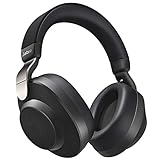
Jabra Elite 85h
The Ideal Way to Have Privacy in Public Spaces

The Jabra Elite 85h is a beautiful pair of wireless headphones that comes with the promise of comfort and good audio. Engineered with SmartSound technology, the audio settings adapt automatically based on your preferences and the environment. The technology can also enable the ANC or HearTrough as needed.
The ANC module lets you enjoy music, podcasts, movies, and more without interferences from the outside world. As a result, the sound quality is superior whether you’re at home or on the subway.
Furthermore, the headphones can stay on for up to 36h (with ANC activated), and you get fast charging (extra 5h from 15 minutes of charging).
Finally, Jabra Elite 85h boasts an elegant design that works both in the office and the gym. The headphones are also durable, due to the nano-coating of internal components that keeps everything safe from water and dust.
You can use these headphones for both music and phone calls (8-microphone technology), but you can also use them with your favorite voice assistant (Siri, Alexa, or Google Assistant) to set appointments and more.
- SmartSound technology that adapts your experience
- Jabra app for high-level personalization
- Good sound quality
- Long battery life
- ANC module
- Can be used for phone calls and/or with Voice Assistants
- Comfortable fit
- Swivel motion to turn ON/OFF
- Charging cable is a little short
- Recharging plug is proprietary
- A bit expensive
Sennheiser Momentum 3
Modern-Looking Headphones for Modern Activities

Comfortable, with over-the-ear design, Momentum 3 from Sennheiser is ideal for at home, in the office, on the commute, or when you’re taking a walk. They are lightweight but durable, due to stainless steel headband that keeps them in place without squeezing your head.
The headphones are fitted with Active Noise Cancellation, to provide users with some peace and quiet regardless of the surrounding environment. There’s also a Transparent Hearing module that matches your environment’s noise, in order to provide the ideal hearing experience.
In terms of hearing experience, Momentum 3 reproduces the bass, mid-range, and treble with extreme accuracy. As a result, the sound quality is impressive! Furthermore, they know when to pause the music or when to shut down based on your behavior.
The controls are easy to find and operate (three physical buttons) and the headphones pair with the last device without any additional settings.
- Premium quality materials
- Sound is clear and rich
- Easy to understand controls
- Headphones pause the music when you take them off
- Comfortable to wear
- ANC is not very good
- They don’t fold flat f(or transportation purposes)
Sony WH-1000XM4
Flagship Cans with Superb Noise Cancellation

To make it real easy for our readers, the Sony WH-1000XM4 Wireless Headphones are probably the best headphones ever made. Seriously, they are incredibly good, and it’s amazing how Sony managed to pull this trick in an under $300 noise-canceling overhead phones with microphone and Alexa voice control.
Basically, these “jack of all trades” can deliver surprising sound quality, near perfect noise cancelation, and lightweight/comfortable design for basically peanuts money all things considered. And what’s best, the design looks very similar to their predecessors, but new features have been added into the mix, the likes of multipoint pairing, DSEE Extreme upscaling, conversational awareness, and auto-play/pause using a built-in sensor.
From a technological point of view, these cans are marvelous by every possible metric, and they deliver exactly what they promise in terms of portability, versatility, and sound quality, and then some due to their exceptional noise cancellation and cutting-edge codec support.
Again, this is as good as it gets, not to mention the cans support Sony’s 360 Reality Audio format which enables spatial audio on stereo headphones plus the LDAC codec that can send a bitrate of up to 990 kbps, i.e. lossless music formats are welcome here for audiophiles.
Bottom line, if you’re looking for classic Sony wireless headphones with the best noise cancelation technology in the industry, tons of features, supremely comfy, and with fantastic sound quality, look no further.
- Premium look and feel
- Situational/conversational awareness
- Can pause music
- Multi point pairing
- Warm and balanced sound
- Supports 360 Reality Audio
- LDAC and AAC
- 38 hours autonomy
- Nothing really
Bose QuietComfort 35 Series II
Complete Control Over your Music Experience

The QuietComfort 35 series from Bose comes with a beautiful design that looks astonishing in any setting. Furthermore, the new noise canceling technology they feature is created to allow people a moment of quiet in the uproar of their day-to-day lives.
The controls are placed on the cups, so they’re easy to reach, and the integration with Amazon Alexa makes it possible to give voice commands. The headphones use Bluetooth to connect to an audio source (phone, tablet, gaming console, TV) and the battery offers up to 20 hours of continuous play.
The materials used for the headphones, headband, and earcups are of premium quality. This means you will be able to wear them regardless of outdoor conditions. Also, the earcup creates a barrier between your music and the outside world.
The Bose QuietComfort 35’s settings can be adjusted using the Bose Connect app. Furthermore, the headphones can be used during phone calls, due to the integrated microphone.
- 3 levels of noise cancellation
- Supports several connections
- Comfortable design
- The sound is clear and crisp
- Integration with Alexa
- Controls on the cups
- Some issues when sporting multiple connections
- No automatic connection after disconnecting
- Sound can feel a bit muffled due to the ANC
Bowers & Wilkins PX7
Comfort & Impressive Sound Quality

Equipped with 43 mm drivers and fine-tuned by highly-praised experts, the PX7 are some of the most impressive wireless headphones on the market. The sound they create is crystal clear and rich, with all the right notes and spatial audio representation.
Moreover, due to adaptive noise-canceling technology, they adjust the system according to your surrounding environment. In addition, if you lift one ear cup, the music automatically stops and you can have a conversation or listen to what’s happening around. When you put the ear cup back on, the music will resume (no further actions required).
With the PX7, you get about 30h of full-play time on one charge (on a USB-C source), but if you’re in a hurry, 15 minutes of quick charge will deliver 6 hours of playback time, which is not bad at all. Also, these headphones connect with other devices using BT 5.0, a version that supports SBC, AAC and aptX adaptive codecs. In addition, the headphones support 2 devices connected simultaneously, but audio can only be played from one device at a time.
Lastly, these headphones were designed for long-term use, which is why they are lightweight and durable. For instance, the arms are made from a carbon fiber composite that provides just the right pressure over your head.
- Durable & lightweight design
- Extremely comfortable
- Good battery lifetime
- Strong and reliable BT connectivity
- Adaptive Noise Cancelling technology
- Auto pause and resume according to your movements
- The accompanying app could be better
- They fold a bit weird, which may lead to problems (in time)
Audio-Technica ATH-M50xBT
Studio Music Wherever You Go

They may look a bit bigger and bulkier than your average wireless headphones, but this can be an advantage. The headband is heavily padded, so you don’t get bothered after wearing them for a long time, and the earcups are big enough to cover your ears. This way, you don’t need ANC to isolate the outside sounds!
Even more, because the cups are a bit bigger, there’s more space for ideal control placement, so you don’t press any buttons by mistake. The battery is also good, with up to 40 hours of battery life.
In terms of sound, the ATH-M50xBT features 15 – 28,000 Hz frequency response. The sound they deliver is clear, natural, spacious, and warm. Also, the 45mm large-aperture drivers deliver an accurate and deep bass response.
Finally, the headphones support aptX, AAC, SBC, which means you can use them to listen to music, watch a movie, or play a game. They also work great for phone calls, due to the integrated microphone.
- Comfortable design
- Amazing sound quality
- Sound isolation without ANC
- Easy to pack due to the collapsible design
- Delivered with a variety of audio jacks
- Can be problematic to wear with glasses
- Lows and highs are a bit raised
Bose QuietComfort Earbuds

Bose is a big name in high quality audio gear, and their QuietComfort Noise Cancelling Earbuds make for an interesting solution if you’re looking for a pair of highly effective, highly portable true wireless earbuds. The price is somewhat on the steep side, as usual with Bose products, but the company’s second attempt at true wireless headphones (after the SoundSport Free) is arguably a huge success, i.e. the QuietComfort are orders of magnitude better than the first-gen.
Sound quality is remarkable, to say the least, and clarity is superb. Add into the mix the fact that the QuietComfort are supremely comfortable, as per the name, and the sound is well balanced, and you end up with a very interesting (yet expensive) solution for traveling. One of the main arguments for buying these babies is the noise canceling technology, which is, let’s say, fantastically implemented. As in, the QuietComfort headphones may very well be the best performing in terms of noise canceling performance in this class.
The QC buds from Bose offer 10 levels of noise canceling, and if you go pedal to the metal and choose level 10, you’ll be literally cut off from the rest of the world, and living in your own sound bubble which is made up entirely from your favorite tracks. Yes, these headphones are THIS GOOD. You’ll probably be able to hear high-pitch sounds, like a fire truck or an ambulance going full speed ahead near you, but even those sounds will be muted to a large degree.
Comfort-wise, the QC earbuds will sit firmly and comfy in your ear even if you have Shrek ears, i.e. Bose did not cut corners in terms of comfort and sound quality, and regardless of what genre of music you’re into, the sound delivered by the QC will not disappoint.
Battery life is good also, at six hours of playback, and the charging case offers two extra charges. Finally, the headphones feature an IPX4 rating, which means they’re basically sweat proof and may survive a little bit of rain, but that’s it.
- Best in class ANC
- Comfy fit
- Rich clear sound
- Large charging case
- IPX4 water resistant
- 10 adjustable ANC levels
- Beautiful soundscape
- Very good call quality
- Bulky charging case
Jabra Elite Active 75t
Better Voice Calls On the Go

Earbuds are usually associated with wired technologies, but the 75t proves there can be wireless earbuds that work and behave flawlessly. Their size and the fact that come with 4-microphone call technology which filters out wind and other disruptive noises around, makes these earbuds perfect for voice calls.
The good news is that they won’t stick out of your ears (like other wireless earbuds). The design is compact and the fit in the ear canal is secure. So, you don’t have to worry you’ll look weird or that they’ll fall off. They also have an IP55 durability rating against dust and water, which means they are capable of withstanding outdoor conditions.
Engineered to accept Bluetooth 5.0, the earbuds have a range of up to 10m. In addition, the connection is reliable, so you don’t have to worry about dropouts. Furthermore, each charge gives you about 7.5h of playtime and, if you have the charging case, you get 28h of portability in total!
The earbuds pair with the Jabra Sound+ app on your phone, which lets you set up your hearing profile. Then the app will adapt the music to your individual needs, customizing your experience.
- Compact design & comfortable to wear
- Integrated microphones to adapt to the environment
- Great for phone calls
- Good sound quality
- Good battery life
- BT 5.0 technology
- The earbuds are a bit on the heavy side
- The left bud may drop out from time to time
Bang & Olufsen Beoplay HX

The Bang & Olufsen Beoplay HX headphones are a work of art in itself. Forget about the price tag and features, just take a look at them and click the “Buy Now!” button. Seriously now, I’m not sure if these over the ear headphones with noise canceling technology are really worth five hundred bucks give or take, but boy, do they look the part of what?
Truth be told, for a high end company like Bang&Olufsen, the Beoplay HX are rather an understated product, as in B&O actually emphasized the content of the headphones, the hardware/performance, rather than style, and they’re all the better for it.
These headphones manage to strike a really pleasant balance between their stylish exterior and performance, but the bad news is that you’ll have to pay dearly for that.
Basically, the Beoplay HX are the quintessential high end headphones: premium materials, premium feel, premium construction, and premium price, even if they don’t prioritize design over performance and still look stunning. To make a long story short, if you can live with paying a little bit more, you’ll end up with active noise cancelling over the ear headphones that are designed/specced to run with the best of them, and on top of that, they’re built to make you feel like a million bucks.
In this regard, the Beoplay HX are second to none; moreover, you’ll end up with supremely tactile and comfy headphones, with impressive tech specs (forget about it, just take’em for a ride), with decent battery life, voice assistance, physical controls, a vibrant and detailed sound, which is composed even at big volumes, and all the features you’ll ever need.
- Premium look and feel
- Lively and vivid sound
- They even smell premium
- Extensive control app
- Comfy
- Noise canceling is so-so
Marshall Major III
The Work of a Sound Icon

With 30+ hours of play time and 40mm dynamic drivers that feature an enhanced bass response with crystal clear highs and well-balanced mids, the Marshall Major III headphones are among the best in their niche.
Furthermore, the Bluetooth aptX connection supports an exceptional audio quality and freedom of movement due to the 30 feet range.
The materials used are of premium quality, which makes the headphones comfortable to wear for prolonged periods of time. They also fold into a compact pack, so it’s easy to carry them around without worrying about their integrity.
Even though they don’t have a dedicated app, it’s easy to control the sound quality and actions you want to make due to the special knob integrated into the right earcup. This is the main control for these headphones and supports a series of movements, each assigned to a certain action.
- Fantastic sound quality
- Solid build with premium materials
- Multidirectional knob as the main control
- Long battery life and wired connection
- The earcups seat on the ear, which can be uncomfortable
- There are many fake copies on the market
- Noise cancellation isn’t that great
PowerBeats Pro
For a Completely Wireless Experience

Designed with active people in mind, the Powerbeats Pro headphones can easily become your best pal during workouts of morning runs!
They are lightweight, fit well in your ears, and stay on regardless of your movements. This is possible due to the adjustable, secure-fit ear hooks that can be customized for each person. Also, they are resistant to water and sweat, so you can put them on and forget about everything else.
While their main purpose is to deliver a balanced audio experience, you can use them for other activities such as taking and making phone calls or organizing your agenda with voice commands. They come with a speech-detecting accelerometer and multiple microphones that focus on your voice for the ideal setting.
The battery will last for up to 9 hours of playtime (24h with the charging case), and they work with any Apple device. Also, these earbuds have each their own controls and connect to your device individually. This gives you full control over sound quality, volume, and more.
- Perfect fit
- Lightweight and comfortable
- Impressive audio quality
- Powerful bass
- Each earbud has controls
- Can make and take phone calls
- Can be used with voice commands
- Good battery life
- Comes with a charging case
- They are in the upper price range
- The case is big and can be a hindrance
Plantronics BackBeat PRO 2
Great Sound Packed with High-End Technology

Though a bit bulky in design, the BackBeat PRO 2 from Plantronics is a design that many rave about. And it’s easy to understand why!
The headphones manage to deliver rich and immersive audio (crisp highs, natural mids, and deep rich bass). Also, they are equipped with on-demand ANC, to keep the outside noises out while working or traveling.
You may also enjoy the 24h battery life and the fact that the music is automatically paused when you take them off your head. Furthermore, the connection will remain strong in the range of about 330 feet from the device!
Not to mention, the BackBeat PRO 2 supports two simultaneous connections, meaning you can switch in between devices without worrying about re-setting the connection.
- Impressive sound quality
- On-demand ANC
- Sturdy build
- Long battery life
- Premium materials
- They’re a bit heavy
- The earcup is more on the ear than over it
- Automatic pause doesn’t work with some streaming apps
- Design is bulky
Sennheiser PXC 550-II Wireless

A flat-folding design, lightweight but durable build, and comfortable headband and earcups make the PXC 550-II headphones a perfect travel companion. In addition, the Adaptive Noise Cancellation automatically adjusts to your surroundings, making the commute a more pleasant experience.
The headphones are comfortable to wear and easy to control due to one-touch controls and integration with modern voice assistants like Alexa, Google Assistant, and Siri. To make them even more useful, the headphones have a triple microphone array that keeps watch for voice commands and allows you to take clear and well-detailed voice calls.
The sound quality is impressive (as with all Sennheiser products), the Bluetooth connectivity is reliable, and you can go on about 30h without needing a charge. Also, if you take them off, the headphones will pause and resume once you put them back on.
Lastly, everything can be fine-tuned using the Sennheiser Smart Control App, which features several sound modes and wide access to your playlist.
- Easy to fold and transport
- Great sound quality
- Good BT connectivity that’s reliable
- 30h battery life
- Impressive ANC control
- Pairs with the Sennheiser Smart Control App
- Voice low battery warning can be annoying
- The companion app is a little clunky
V-MODA Crossfade 2 Wireless Codex Edition
Designed with Durability in Mind

Crossfade 2 is part of a line of gorgeous headphones designed by the well-known V-MODA. These are among the few they created to support wireless mode using Bluetooth connectivity, but they can also be used in analog mode, using the removable cable.
In wired mode you can use them in professional studios or for activities that are usually challenging for wireless headphones (gaming or watching videos). Also, the 50mm drivers and dual-diaphragm deliver unmatched sound quality in both wireless and wired modes.
The design and sound they deliver are widely appreciated by renowned publications all over the world. The earpads use memory foam cushioning that increases comfort and improves isolation and the materials used are highly durable. The headband is heavily padded, but it still allows air to flow, for better ventilation.
The battery will let you enjoy up to 14 hours of constant playtime. Also, the headphones are delivered with a tough and compact travel case, that is packed with accessories (charging cable, earplugs, USB cable, and more).
- Impressive design
- Ultra-portability due to the compact case
- Military grade materials for increased durability
- V-MODA sound signature
- Good battery life
- They’re a bit heavy
- They can get uncomfortable after a while
- Price is a bit steep
With the right pair of wireless headphones, you can enjoy the audio of your games and music while you’re running, exercising, traveling, working or relaxing at home. Whether you prefer the familiar style of on-ear headphones, the noise-cancelling capabilities of over-ear headphones or the convenient movability of in-ear headphones, there’s plenty of options to suit your needs for comfort and budget.
For gamers, musicians and media enthusiasts looking for the best Bluetooth speakers, noise cancelling headphones, earbuds or wireless headphones, it all comes down to what works for your individual lifestyle.


The Backbeat Pro 2 special edition has smart sensors that pause the music when the headphone you detach from your head. If you put it back on, the music immediately resumes where it has stopped.
I always prefer small sized in ear earbuds. Using Rowkin for last few months. I’d love to recommend it for anyone. They’re just perfect.